
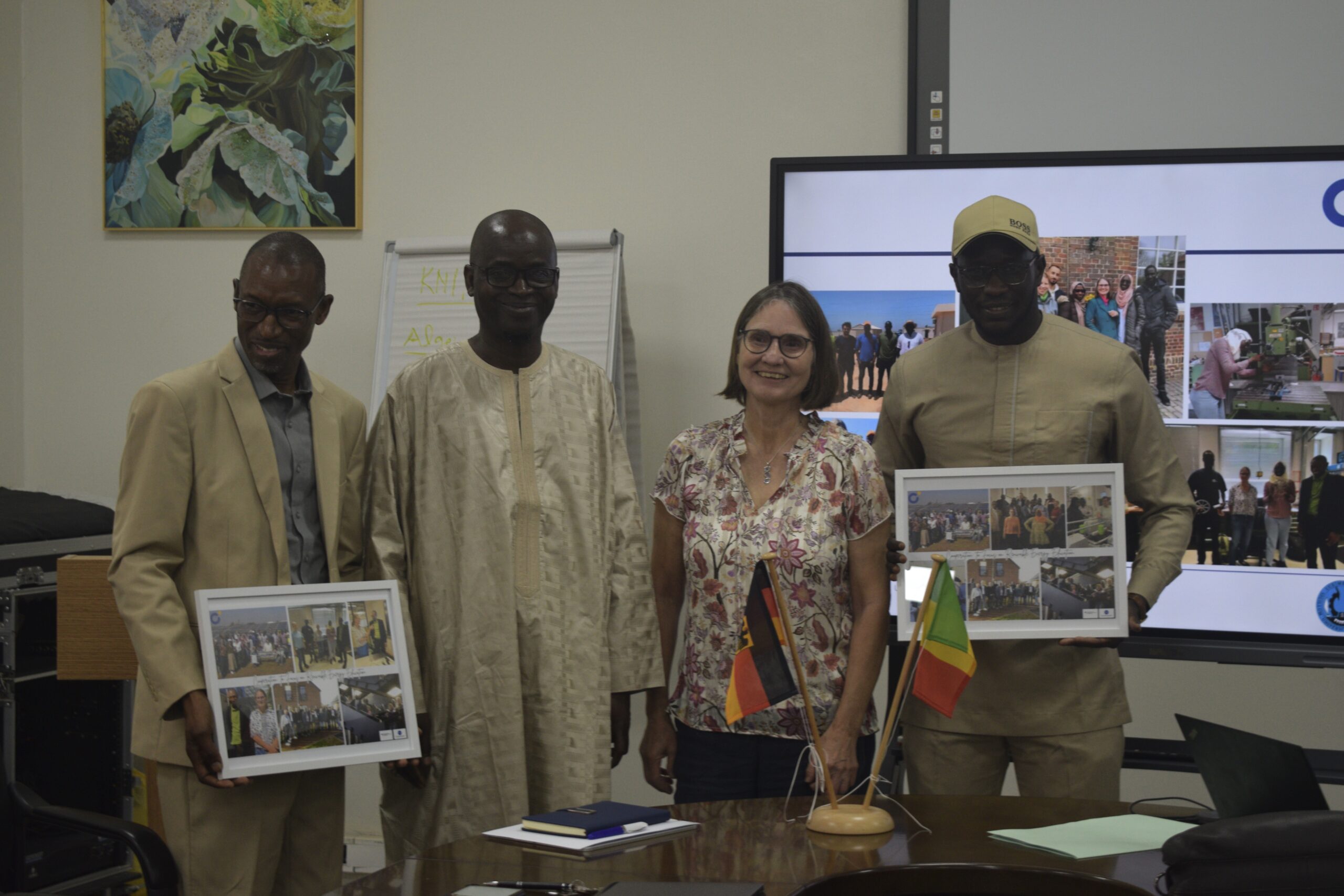
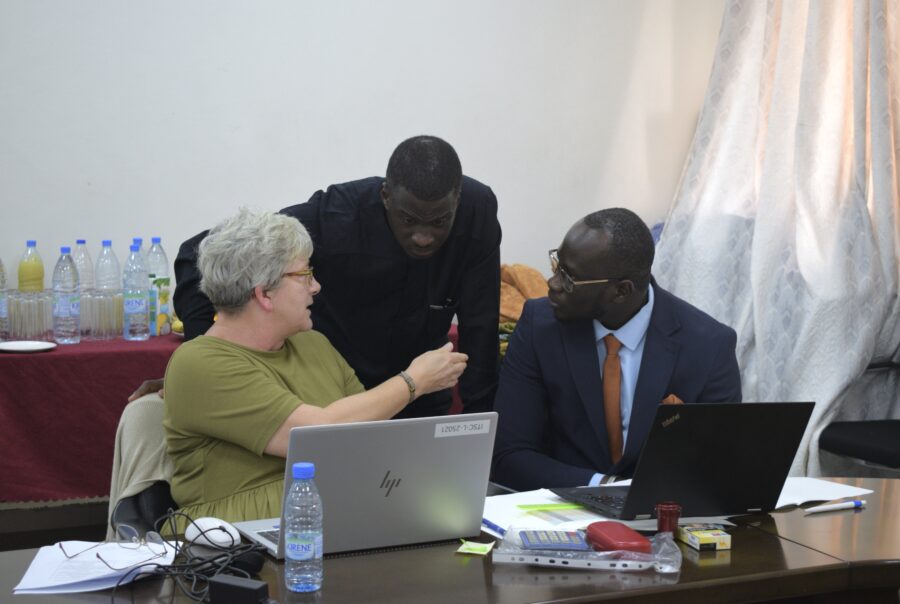
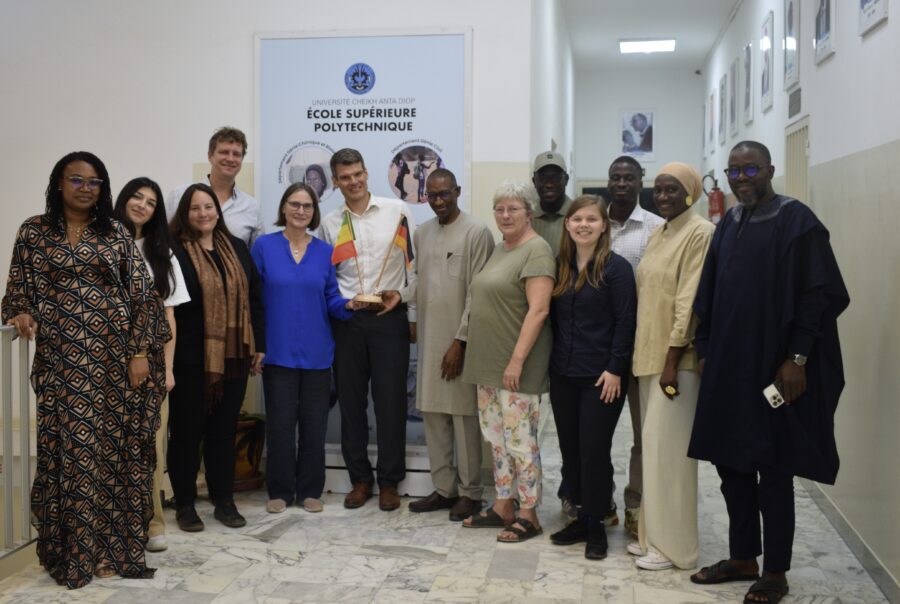
The HAW Hamburg delegation was warmly welcomed by Prof. Sambe, Director of ESP, and Prof. Thiaw, Project Lead. Project Manager Prof. Traore and Project Lead Prof. Usbeck presented the project and its objectives. Likewise, the HAW professors Prof. Gärtner and Prof. Lapke introduced themselves and reported on their activities at HAW.
”Three years of collaboration
Retrospective and outlook of CO2Free
Welcome & introduction

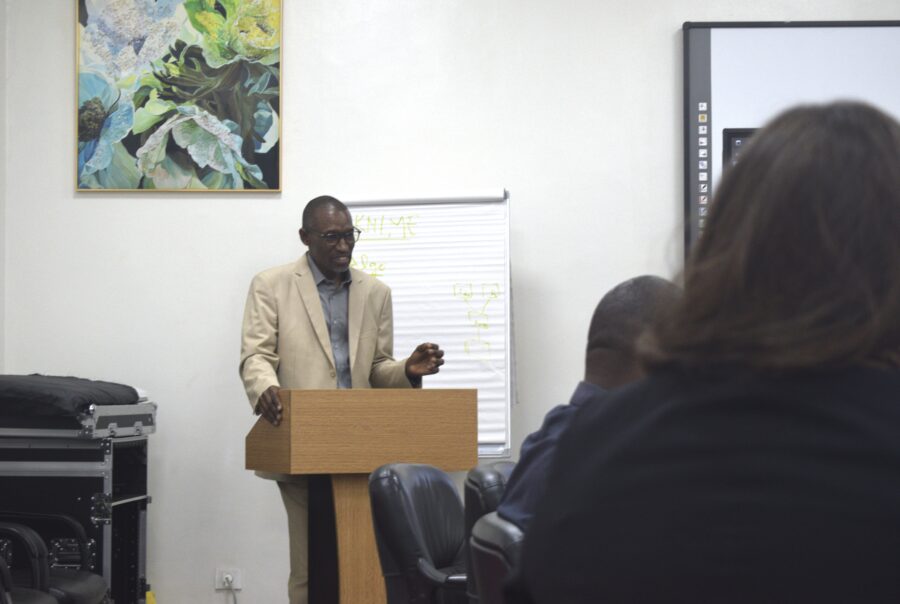


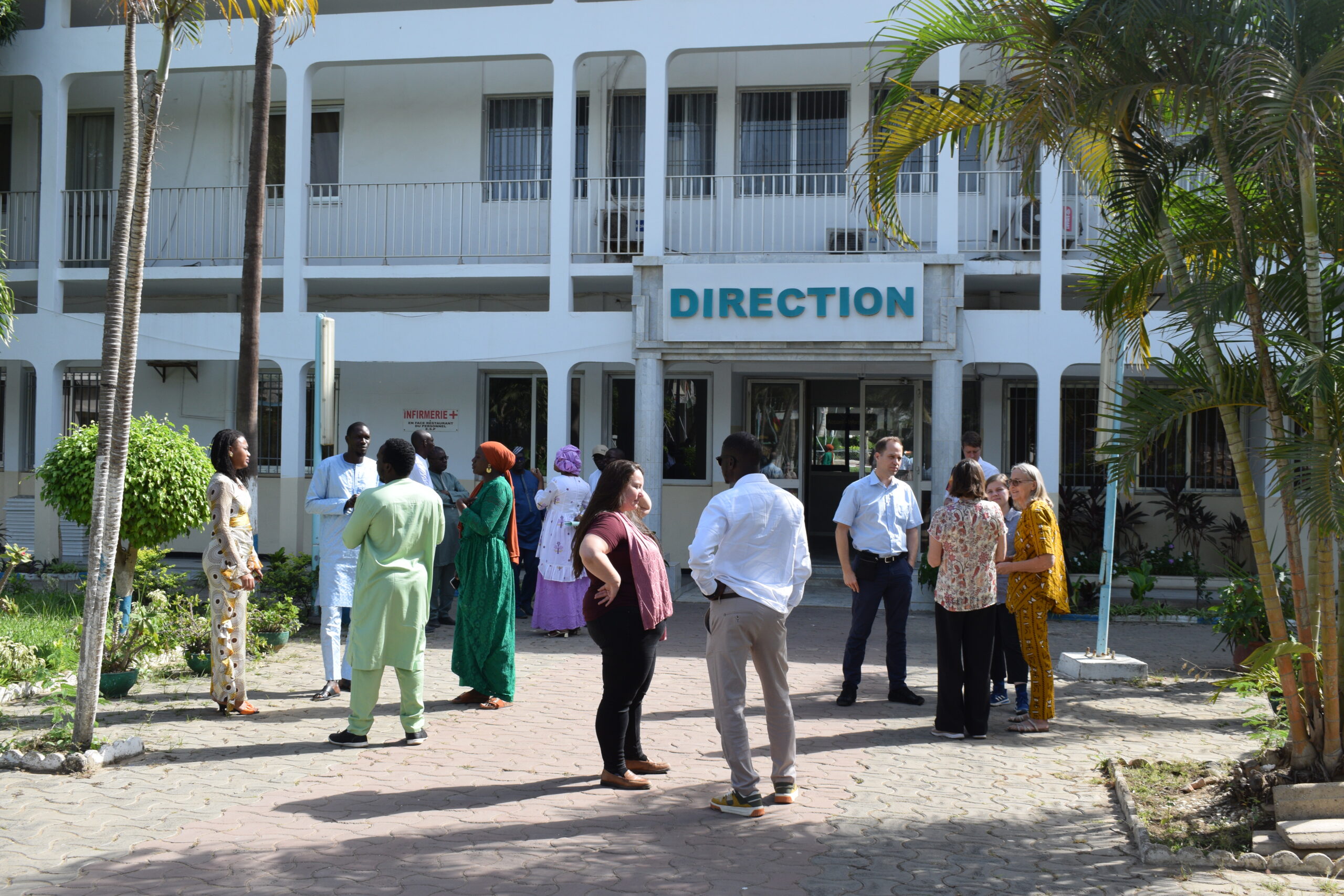
A central component of the delegation trip were the closing conferences. These provided an opportunity to look back on the past three years of collaboration and reflect on them.
Closing conferences
Retrospective
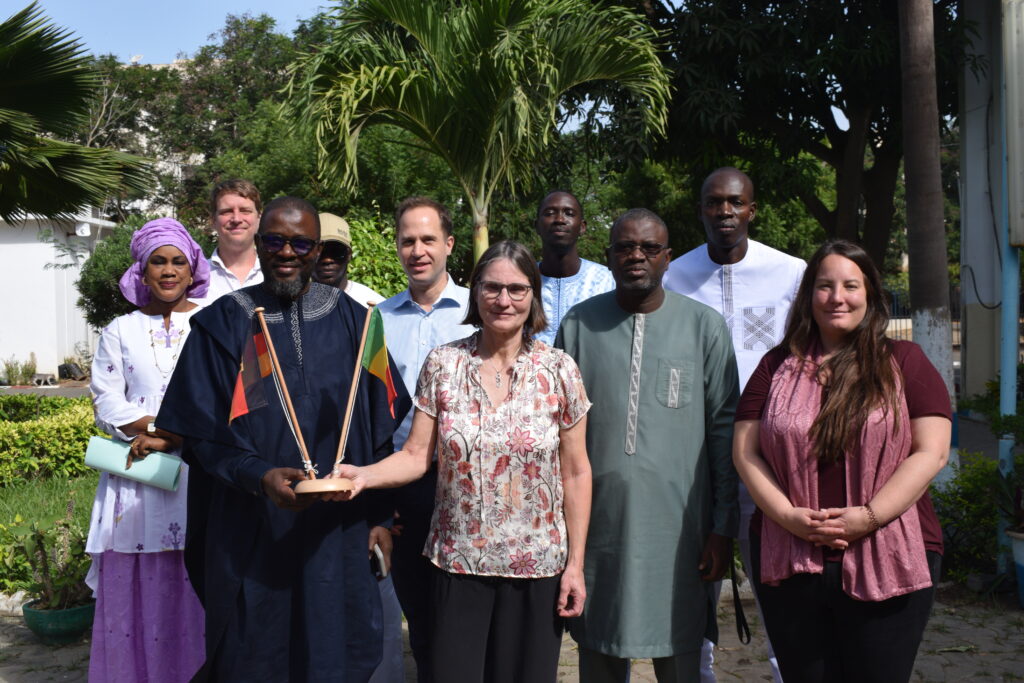
In retrospect, it became clear that the goal of strengthening education in the field of renewable energies in Dakar was successfully achieved. At ESP in Dakar, a new degree program was established for which a practice-oriented curriculum was intensively developed. The close collaboration made it possible to bring together the diverse experiences and ideas of both partner institutions. The first cohort of students is now in their third semester. During the delegation trip, there was also an opportunity to get in contact with these students and gather their impressions of the new degree program.
Visiting professorship from Senegal
The project promoted intensive exchange between lecturers and students. For example, Fatou Ndiaye, a professor at ESP, spent a semester at HAW Hamburg, where she taught in the Department of Electrical Engineering. As part of the closing conferences, she shared her experiences and in particular addressed differences between the German and Senegalese education systems as well as in teaching. Her insights formed the basis for a subsequent joint exchange of experiences.
Student exchange
The doctoral students Emmanuelle Dosseh and Mankeur Ndiaye were also part of the exchange program. They spent three months at HAW Hamburg to gain new impulses for their research in the field of hydrogen technology. During the conferences, they reported on their research projects as well as on their personal and specialized experiences.
Similarly, the doctoral students Cheikh Niang Sall and Sidy Mouhamed Samb from ESP Dakar had the opportunity to complete a stay at HAW Hamburg. During their stay, both completed an internship and worked on their projects.
In addition, numerous students from HAW Hamburg had the opportunity to conduct research within their master’s projects in collaboration with ESP. One example of this is Dominique Mahler, who also participated in the delegation trip. She presented her group’s master’s project in the field of fiber composite materials, which was carried out both in Senegal and at HAW Hamburg.

Visit to a solar park
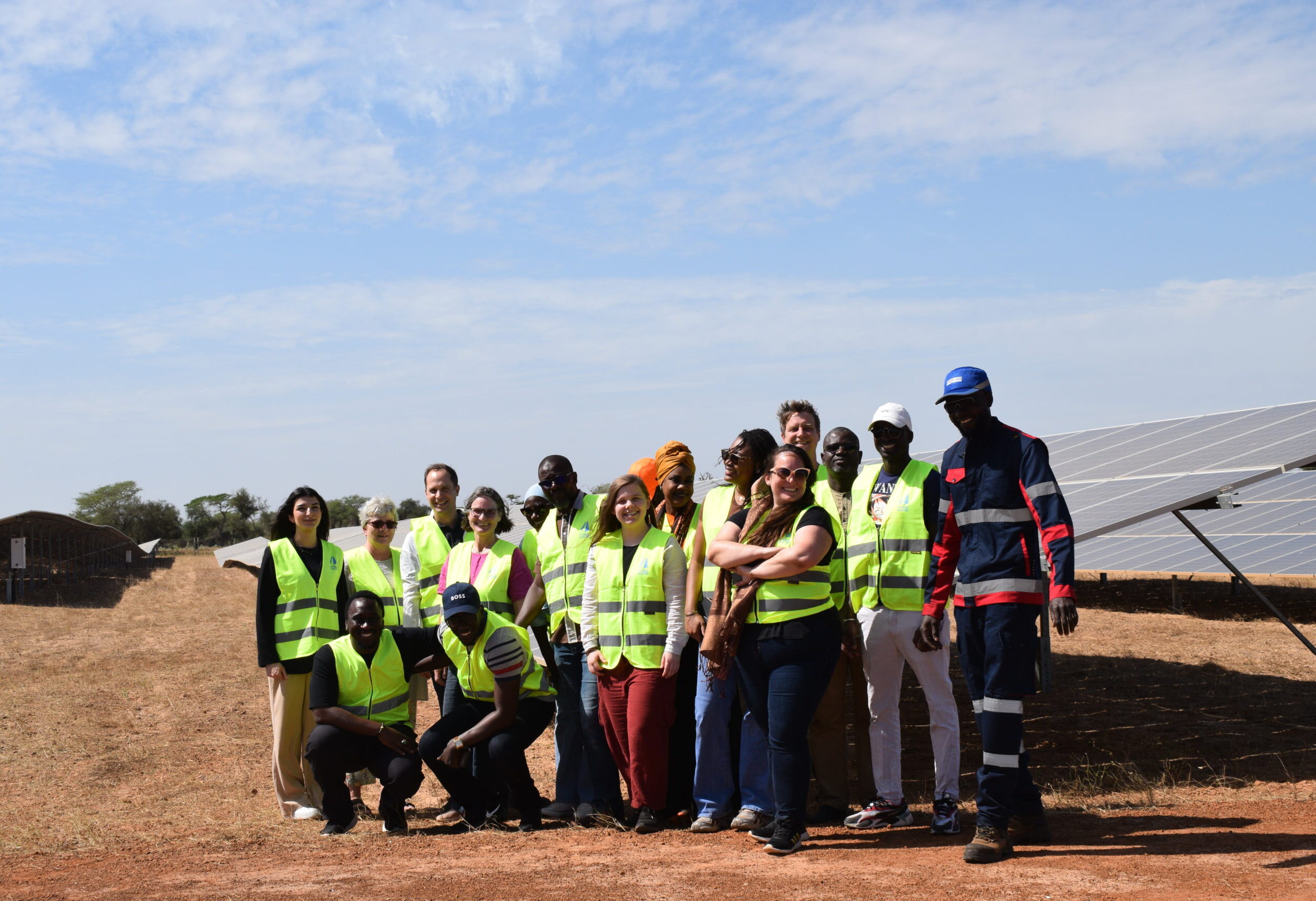
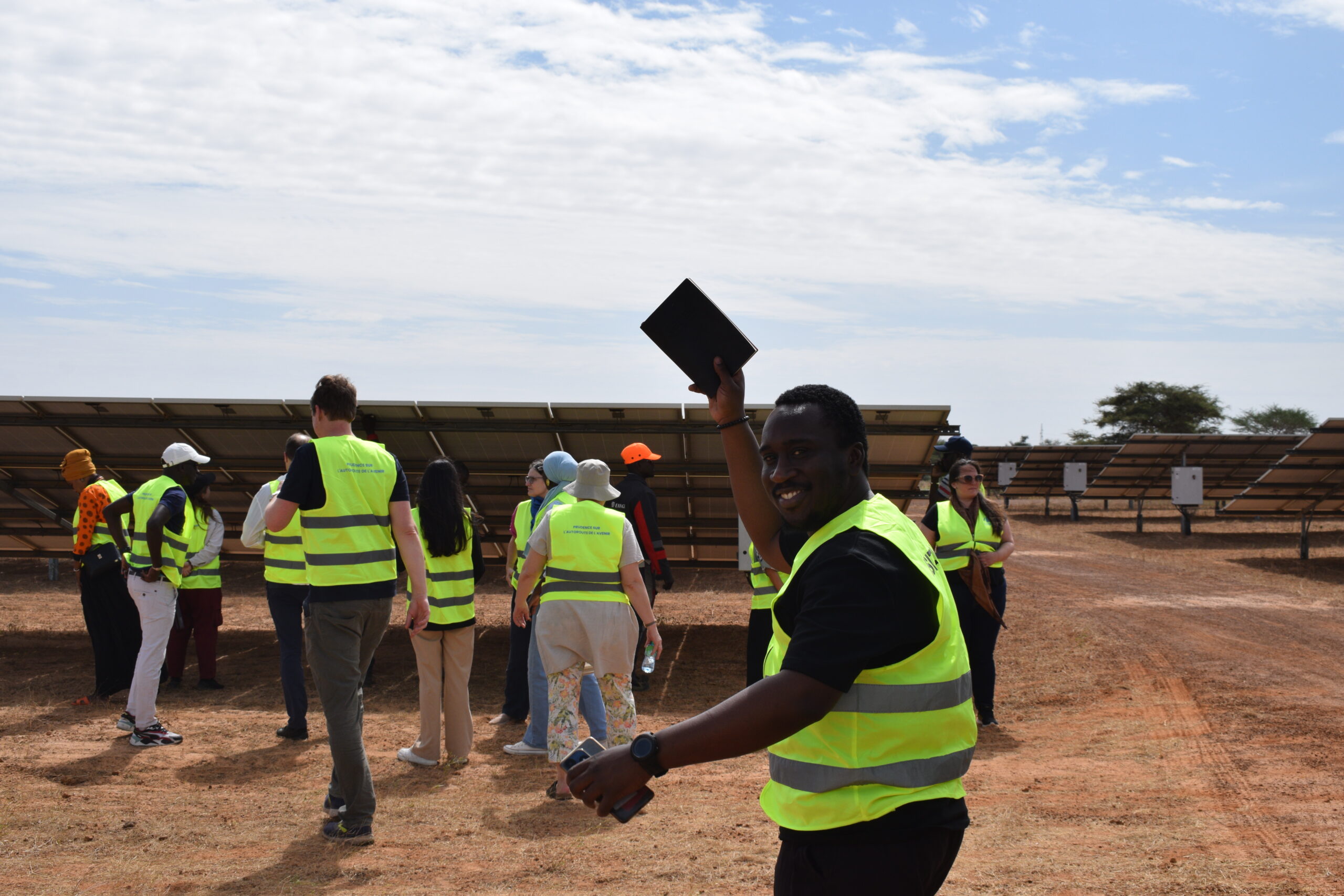
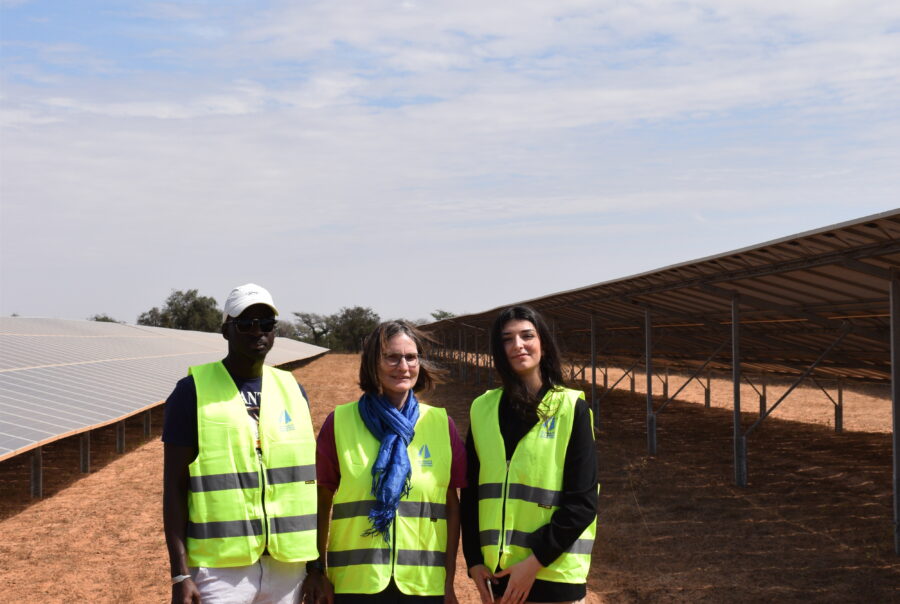
One of the highlights of the trip was the visit to a large solar park in the Thiès region. On site, participants gained practical insights into the operation and technical implementation of the facility as well as into the use of renewable energy in Senegal. During a guided tour, it was clearly explained how the individual components interact and what role the solar park plays in the country’s energy supply. It also became evident how important it is to adapt technical solutions to local conditions. Overall, the visit provided an impressive insight into the implementation of sustainable energy generation.

Exchange with external guests
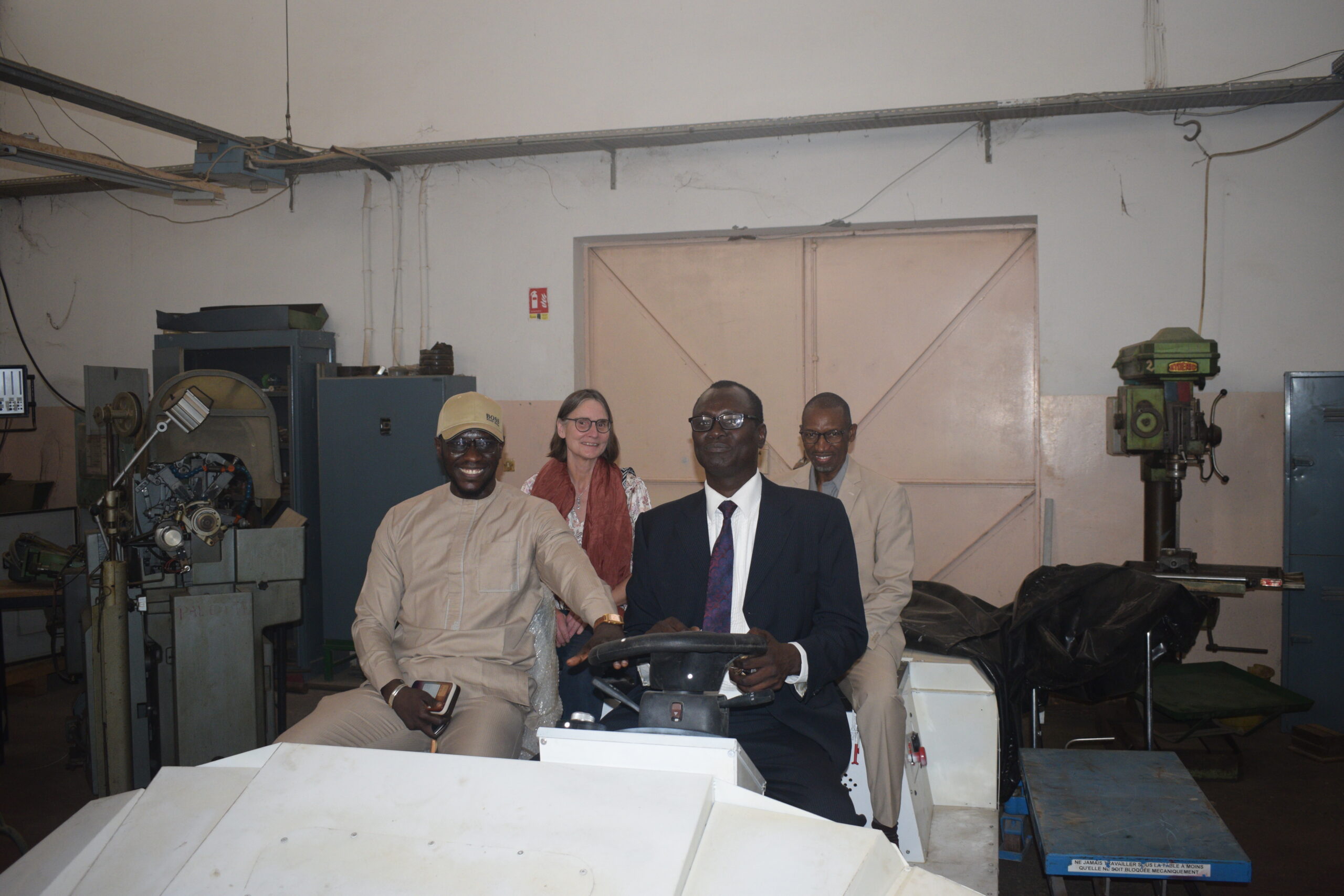
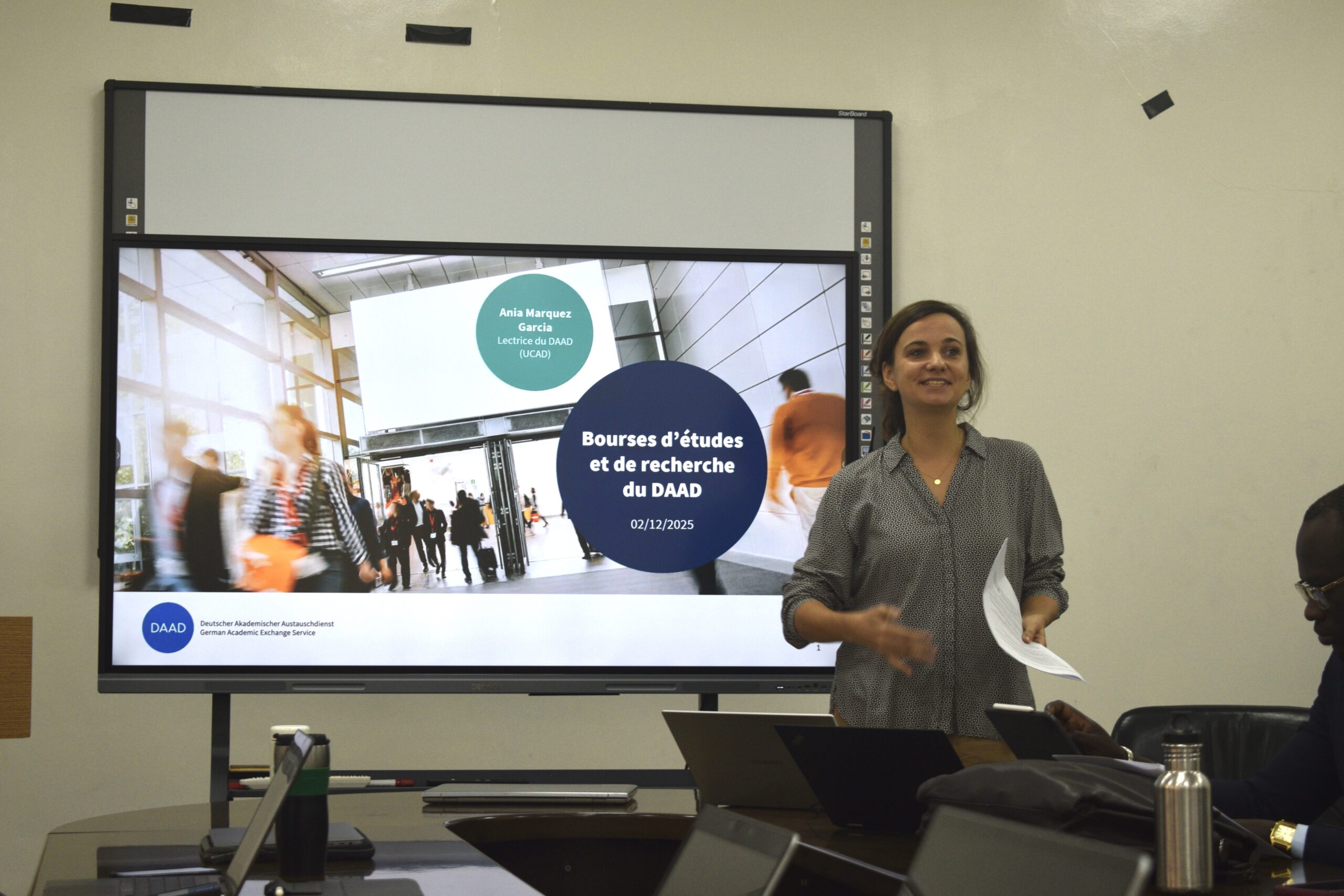
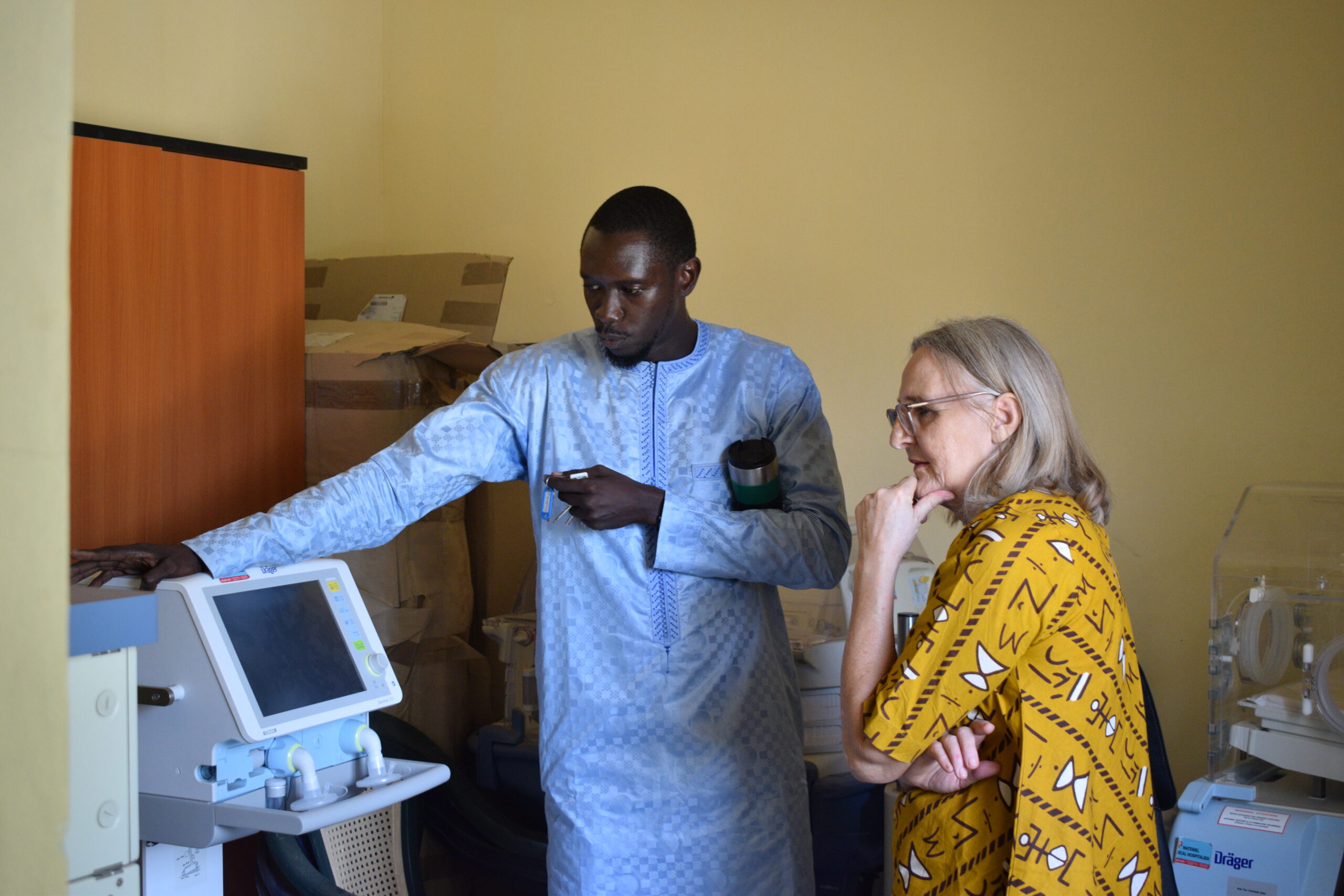
During the delegation trip, the CO2Free team welcomed several external guests. These included Ania Marquez Garcia, who provided information about DAAD scholarship programs, as well as Casjen Ohnesorge from the German Embassy in Senegal. In addition, Hanne Diaw, a Hamburg-based physician who is also active in Senegal, was present on site. She examined the equipment of the biomedical program.
Outlook for future collaboration
Over the past three years, numerous goals have been achieved, participants have learned from one another, and new ideas have been continuously developed. Throughout the project, a wide-ranging exchange took place in the areas of teaching and student mobility. During the delegation trip, not only was a final review of the project carried out, but ideas for possible future collaborations were also gathered.
Thus, there is, among other things, the possibility of developing joint teaching formats in the future, for example in the form of tutorials. As numerous modules from both institutions have already been compared, the established cooperation provides a solid foundation for this. Joint learning platforms were discussed. In addition, exchanges took place regarding semesters abroad as well as joint research projects.
Dieses Projekt wird gefördert vom DAAD aus Mitteln des Bundesministeriums für wirtschaftliche Zusammenarbeit und Entwicklung (BMZ).